Talk to your taxidermist first
The best cape is the one your taxidermist asked for. Call before the hunt. Some want the whole head and cape, others want the cape skinned to the skull.
If you're unsure, the safe choice is to make the cape cuts below and leave the head attached. Get it to the taxidermist or a freezer the same day.
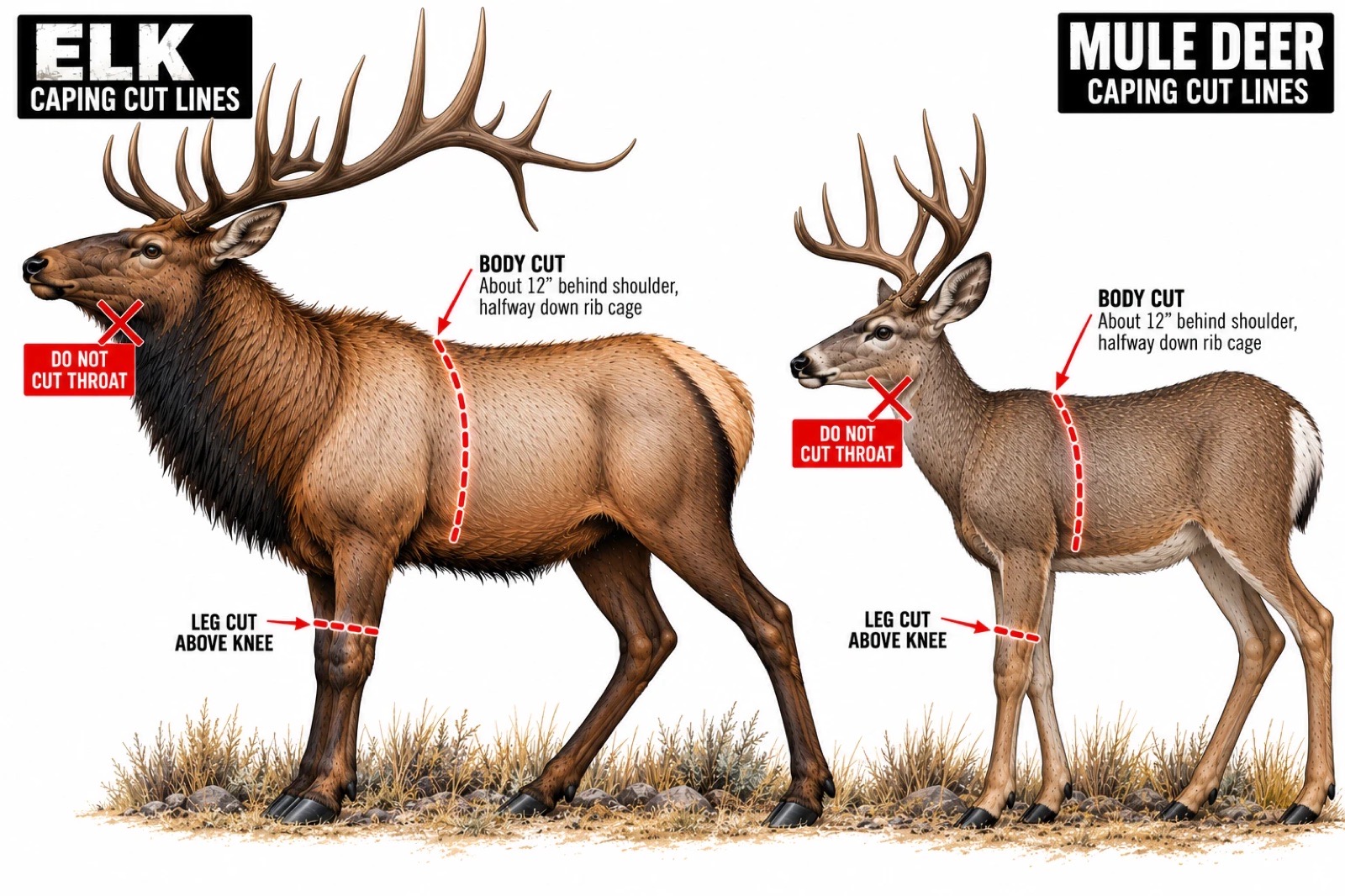
For a shoulder mount, never cut the throat or brisket, and never drag the animal by the neck over rocks. Those cuts and scrapes show on the finished mount.
Make the cape cuts
- Cut around the body well behind the front shoulders, about midway down the rib cage. Cut farther back than you think. Extra cape is easy to trim; a short cape can't be fixed.
- Cut around each front leg just above the knee.
- Cut up the BACK of each front leg, from the knee cut to the armpit, then join it to the body cut. Never cut up the front or along the brisket.
- Peel the cape forward over the shoulders and up the neck to the base of the skull.
- If you're leaving the head on, cut the neck meat down to the spine, then twist the head to separate it at the first neck joint (the atlas joint) behind the skull.
A deer head and cape fit in a large cooler or game bag and can be carried by one person.
An elk head, antlers and cape together often weigh 50 pounds or more. Pack it out separately from the meat, and flag the antlers in blaze orange if hunters are near.
Keep the cape cool, dry and clean
- Get the cape out of the sun and spread out so it can cool. Hair holds heat.
- Keep it out of water and blood, and away from flies.
- Get it to the taxidermist within about a day. If you can't, roll it flesh to flesh, put it in a plastic bag and freeze it.
- Only salt a cape if you know how to turn the ears, lips and eyelids. Done wrong, salting can cause hair slip. When in doubt, freeze.
Take photos of the animal from several angles for your taxidermist: face, ears, nose and the shape of the neck. It helps them match the mount to your animal.
European (skull) mounts
For a European mount, the taxidermist cleans the skull down to bone. Remove the hide from the head, or bring the whole head and ask them to do it.
If you're crossing state lines, check CWD transport rules. Many states only allow a skull plate or skull that's been cleaned of all tissue.
General guidance only. Rules on tagging, evidence of sex, wanton waste and carcass transport differ by state; check your state's current regulations.