First steps at the animal
- Approach from behind and confirm it's dead: no breathing, and no blink when you touch the eye with a stick.
- Tag it as your state requires, often before you move it.
- Take your photos quickly and respectfully, then get to work. Heat is the enemy.
- If you want a shoulder mount, read Caping for the taxidermist first. Don't cut the throat or brisket.
- Choose your method: the gutless method (below) for elk and backcountry hunts, or the classic gutting method if you'll drag or haul the animal out whole.
The gutless method
The gutless method takes the meat off without opening the body cavity. It's faster, cleaner and cools meat quicker. It's standard for elk and works well for any backcountry deer.
- Lay the animal on its side. Cut the skin along the spine from the base of the skull to the tail, and down the back of each leg.
- Peel the hide down to expose one whole side, using it as a clean surface to work on.
- Remove the front shoulder: lift the leg and cut along the rib cage behind the shoulder blade. There's no ball joint; it comes free with meat alone.
- Remove the hindquarter: cut along the pelvis and through the hip (ball-and-socket) joint, then work it free.
- Remove the backstrap: cut along the spine and along the top of the ribs, then peel it free from front to back.
- Take the neck meat and the meat between the ribs.
- Remove the tenderloin: cut through the thin muscle just behind the last rib and reach in along the spine. It slides out without opening the guts.
- Bag each piece as it comes off. Flip the animal and repeat on the other side.
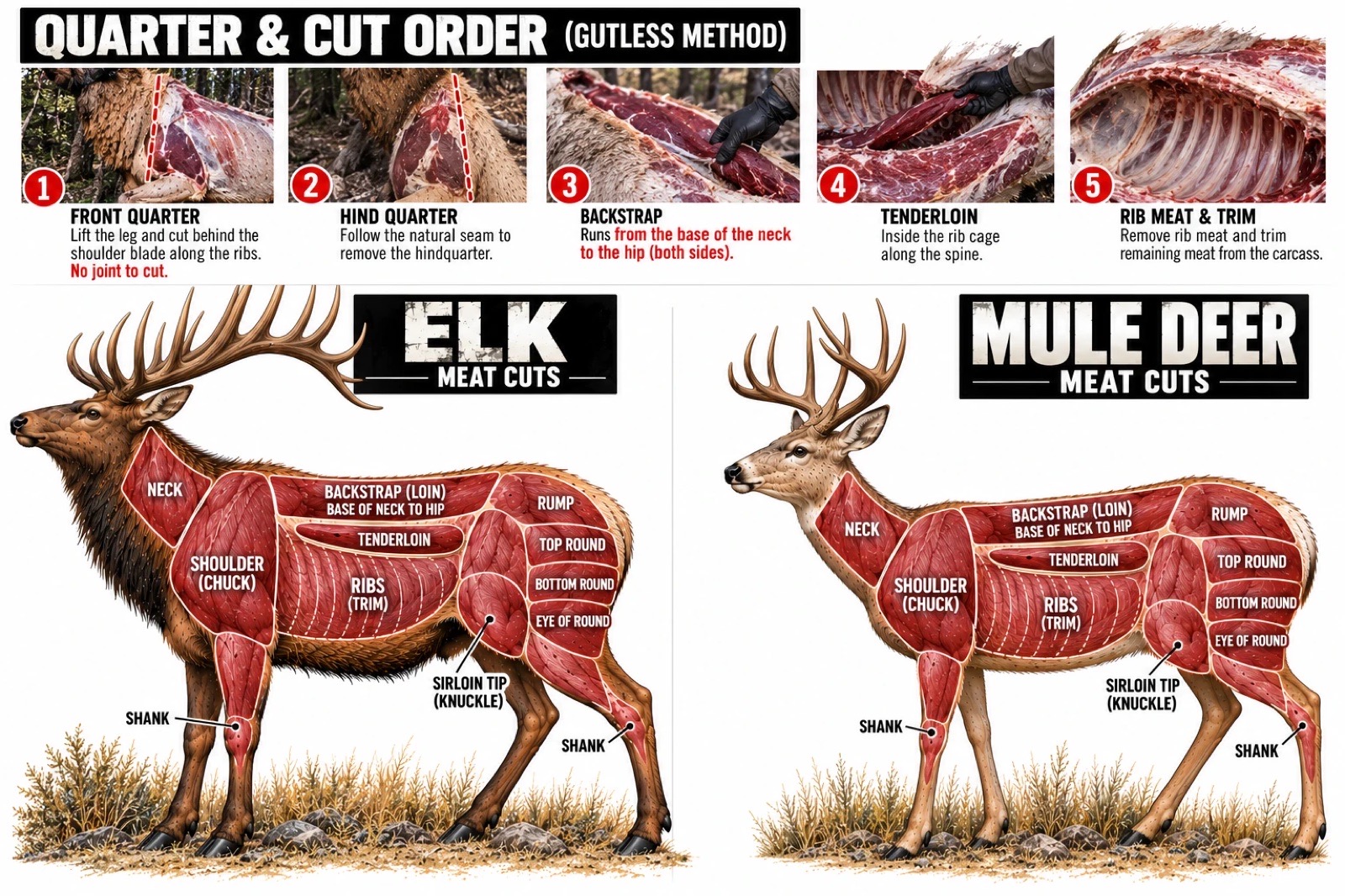
A bull elk hindquarter often weighs 50 to 80 pounds with the bone in. Boning out the meat cuts the weight and speeds cooling, if your state allows it.
Leave evidence of sex attached to a quarter if your state requires it. Testicles or udder stay on a hindquarter; on a bull, antlers on the skull plate often count.
The classic gutting method
- Put on gloves. Roll the animal onto its back or side with the head slightly uphill so gravity helps.
- Cut around the anus (and vulva on a doe or cow) to free the end of the intestine, then tie it off with string or a zip tie if you can.
- Pinch up the belly skin just ahead of the pelvis and make a small cut. Slide two fingers in under the skin, blade edge up between them, and open the belly up to the bottom of the rib cage. Your fingers keep the blade off the stomach and intestines.
- Carefully free the bladder and intestines at the pelvis without puncturing them.
- Cut the diaphragm, the thin wall of muscle separating the belly from the chest, close to the ribs all the way around.
- Reach up into the chest as far as you can and cut the windpipe and esophagus. Pull everything down and out.
- Roll the animal on its side to drain blood. Save the heart and liver in a bag if you eat them.
- Prop the chest cavity open with a stick to let air in, and get the animal into shade.
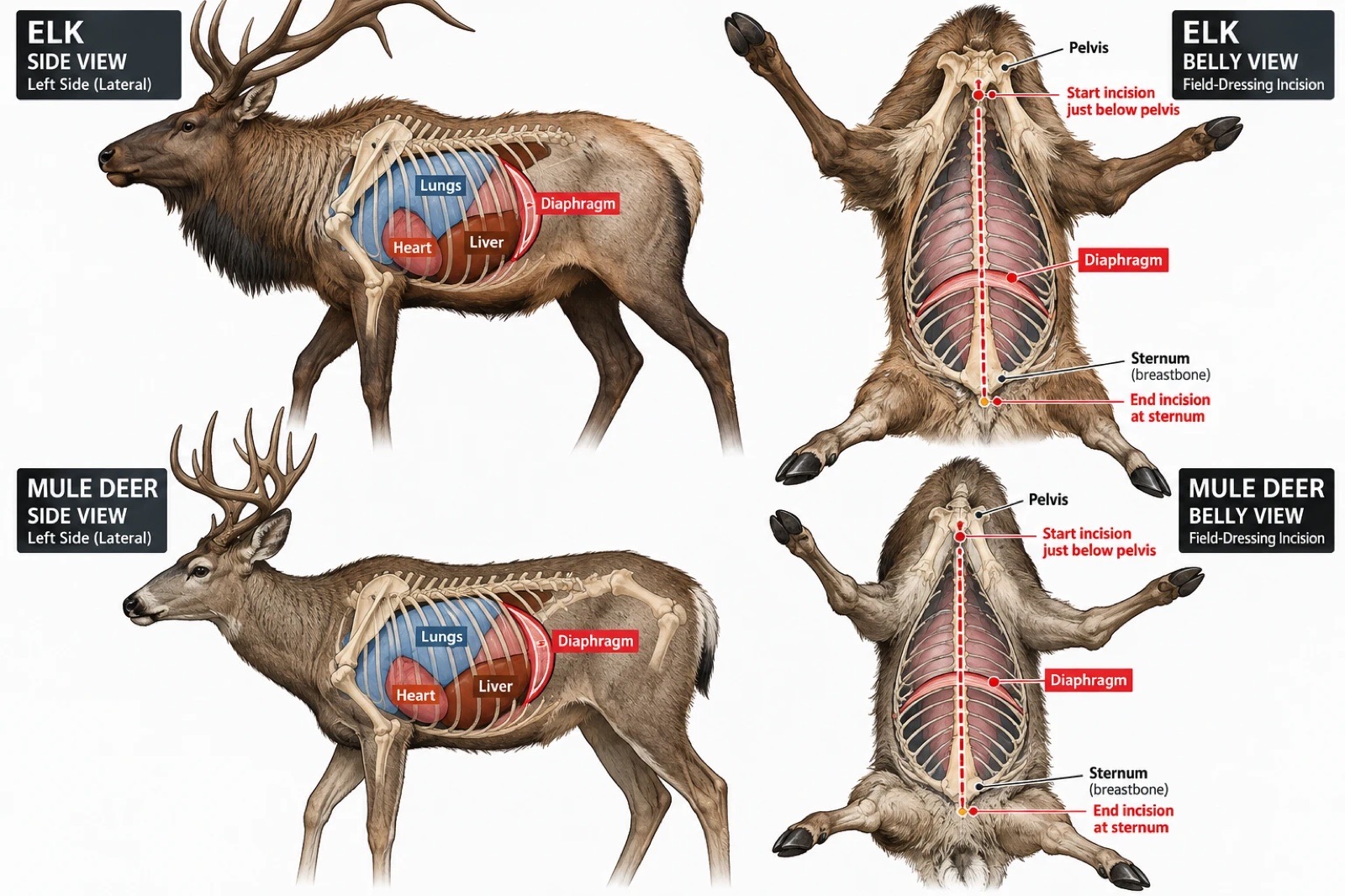
With a deer, you can usually gut it, drag it out and hang it whole. Skin it as soon as practical in warm weather; the hide holds heat.
Gutting an elk is hard work. An elk is too big to drag far, and the body heat trapped in a whole carcass can spoil meat. Most elk hunters use the gutless method.
If you puncture the stomach or intestines, rinse or wipe the area clean and trim any contaminated meat. Work fast; it's not ruined.
General guidance only. Rules on tagging, evidence of sex, wanton waste and carcass transport differ by state; check your state's current regulations.