Tools and setup
- A sharp boning knife and a fillet knife, plus a sharpener. Sharp knives are safer.
- A large cutting board or a clean table covered in butcher paper.
- Tubs or bowls for steaks, roasts, grind and scraps, kept cold.
- A meat grinder, and a vacuum sealer or plastic wrap with freezer paper.
- A marker and tape or labels.
Work cold. Keep the meat you're not cutting in the fridge or a cooler, and clean surfaces often.
Trim it right
- Remove silver skin (the thin, shiny membrane). It's tough and won't cook down.
- Trim off most fat. Deer and elk fat can taste waxy or gamey.
- Cut away bloodshot meat and any hair or dirt.
- Save clean trim for grind.
Break down the cuts
- Backstraps: run along both sides of the spine. Cut into steaks or medallions, or leave whole for roasts. These are the prime cuts.
- Tenderloins: inside the body cavity along the spine. Small and tender; cook them whole.
- Hindquarters: separate along the natural seams into the top round, bottom round, eye of round and sirloin tip (knuckle). Each makes steaks, roasts or jerky.
- Front shoulders: more connective tissue. Great for roasts, stew or grind.
- Neck: a slow-cooked neck roast is a favorite, or grind it.
- Shanks: braise them whole (osso buco) or grind them.
- Ribs and trim: grind them, or slow-cook the ribs if there's enough meat.
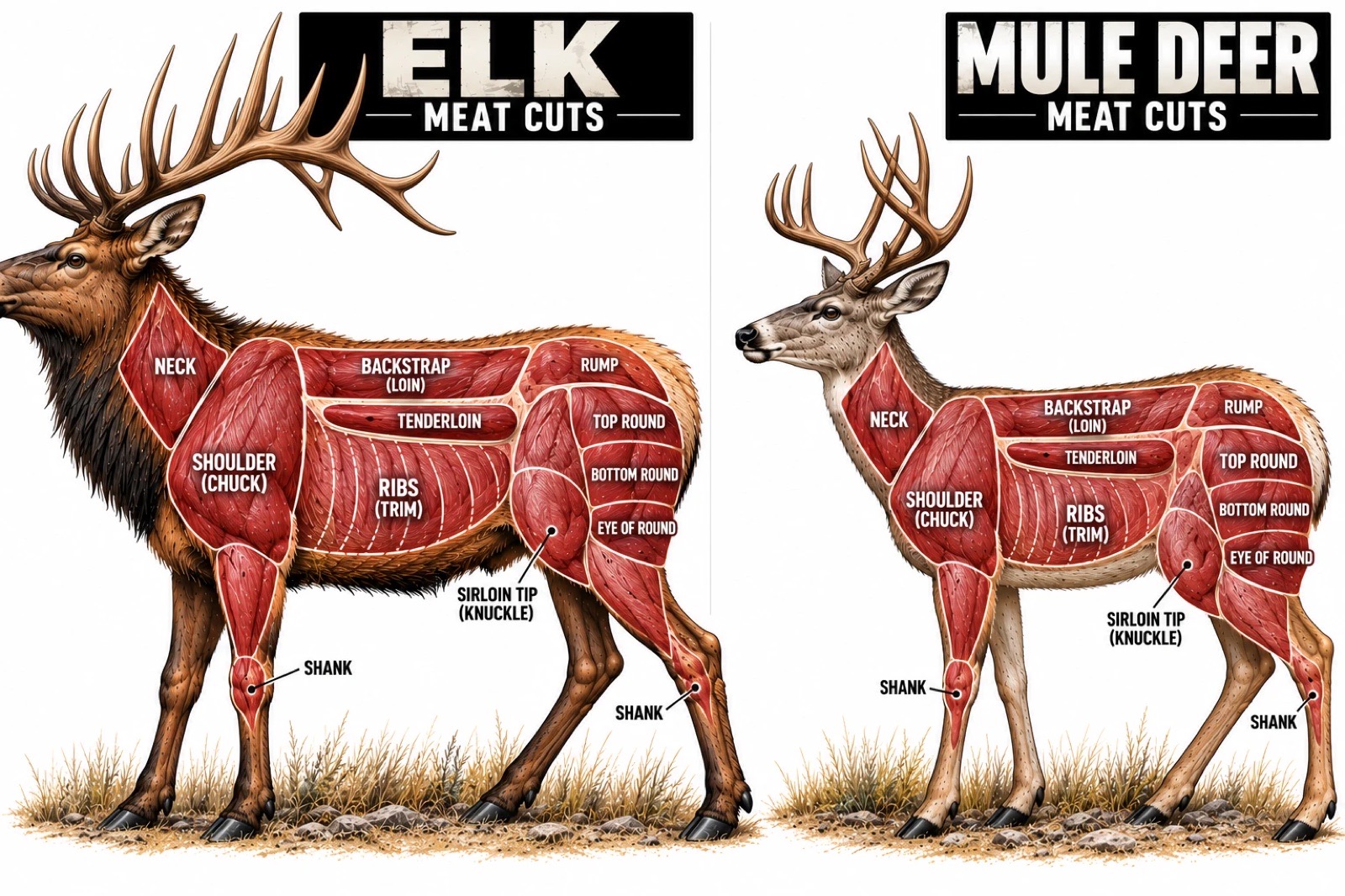
Follow the seams. The muscles of a hindquarter separate along natural lines of connective tissue. Let your fingers find them and use the knife to help.
Grinding
- Keep meat and grinder parts very cold, close to freezing, for a clean grind.
- Many hunters add 10 to 20 percent beef or pork fat for burgers and sausage. Leave it lean for chili and tacos.
- Grind once coarse, then again fine if you want a smoother texture.
Package and freeze
- Vacuum seal, or wrap tightly in plastic wrap and then freezer paper. Squeeze out the air to prevent freezer burn.
- Label every package with the species, cut, weight and date.
- Freeze packages flat and spread out so they freeze fast, then stack them.
- For best quality, use within about a year.
A field-dressed deer typically yields 40 to 70 pounds of boneless meat, depending on size.
A mature elk typically yields 200 to 250 pounds of boneless meat. Clear freezer space before the hunt.
Cooking it safely
Cook ground venison to an internal temperature of 160°F, the USDA recommendation for ground meat. Many hunters cook whole cuts like steaks and roasts to medium-rare; follow USDA guidance and your own judgment.
Wild game is lean and easy to overcook. A meat thermometer is the best tool in your kitchen.
General guidance only. Rules on tagging, evidence of sex, wanton waste and carcass transport differ by state; check your state's current regulations.